Elisabeth Woeldgen (Hasselt University) on SAF
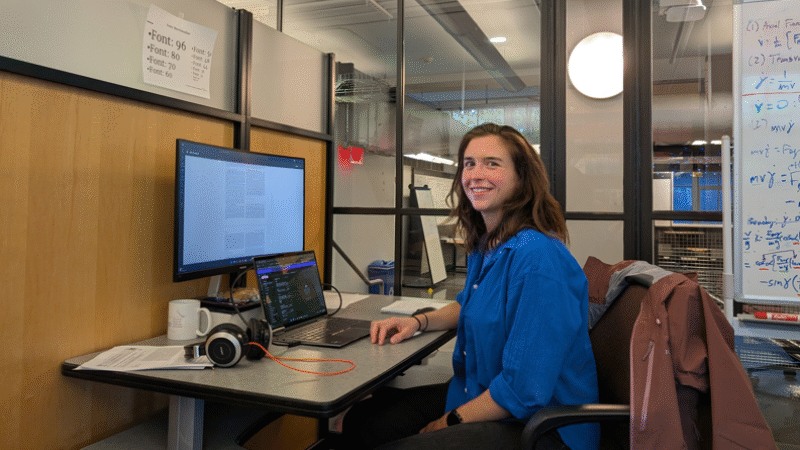
“Fostering collaboration between policymakers, industry, standards organisations, and others is one of the most rewarding parts of Stargate”, Elisabeth Woeldgen tells us about her experience
Elisabeth Woeldgen is a PhD researcher in environmental economics at the University of Hasselt in Belgium. Her work focuses on the downstream supply chain of sustainable aviation fuels (SAF), which is often opaque and poorly understood, with limited data and literature. Through the Stargate project, she has been examining the role of different stakeholders, regional differences, and accounting systems such as book-and-claim, which are often praised for reducing costs and complexity but rarely quantified.
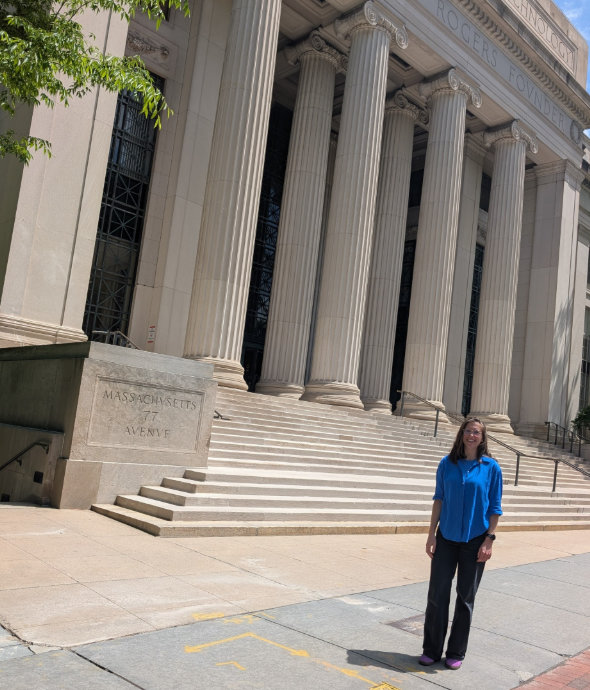
During a five-month research stay at MIT, invited by her committee member Dr. Florian Allroggen, Elisabeth worked with the U.S. Department of Transportation Volpe’s open-access FTOT tool. She used it to model SAF distribution scenarios across the U.S., comparing costs and emissions under different supply chain configurations.
As she is now back in Europe, we wanted to gather her insight on SAF and her experience in the US.
What is your and Hasselt University’s role within the Stargate consortium?
Hasselt University leads Work Package 5 (SAF) of the Stargate project. We work closely with Brussels Airport, To70, Skytanking, Quatra and other partners to design, test, and evaluate measures that accelerate SAF uptake. Our objectives include: enabling SAF blending closer to the airport, increasing used cooking oil collection, and running awareness and adoption initiatives. We also coordinate with other work packages to ensure actions are scalable and have an impact beyond Brussels Airport.
My role is to coordinate the SAF downstream supply-chain work, modelling blending costs, shaping procurement and blending options, and providing workshops and presentations to share knowledge and raise awareness on the topic.
What can Stargate bring to the industry from a SAF standpoint?
Stargate acts first and foremost as an enabler of collaboration. We bring together airports, airlines, fuel suppliers, fuel farm operators, and all other actors involved in the SAF procurement chain. With today’s urgency to scale up SAF, we cannot afford to point fingers; everyone has a role to play. Stargate helps create a system-level overview of the SAF supply chain, ensuring that stakeholders understand not only their own responsibilities but also each other’s constraints.
It also offers a practical and safe environment to test new ideas and approaches. This allows partners to look beyond traditional practices, exchange views, and jointly explore solutions that can support broader SAF deployment.
What innovations are you driving from Hasselt University?
Hasselt University contributes critical thinking, scientific rigour, and analytical skills to the Stargate project. While each objective is new to our department, we know how to systematically approach challenges, including those with an industrial dimension. We also bring a neutral and independent perspective, ensuring transparency when assessing the economic and environmental implications of the different options ahead.
How can we work toward more acceptance of SAF?
Building broader acceptance of SAF, whether through increased production, greater airline uptake, passenger willingness to pay, or other contributions, requires a clear understanding of aviation’s growing energy demand, the limited options to reduce the sector’s environmental footprint, and the central role SAF plays today and will continue to play in the decades ahead.
Are the targets set by the EC achievable in the current situation? If no, what lacks?
The targets set by the ReFuelEU mandate are achievable for the first ten years. Beyond that, the required volumes rise significantly. With limited FOG feedstock, other technologies will be needed. However, the necessary refineries still need to be built and commissioned. Given the typical delays in bringing such facilities into operation, there is a clear urgency to accelerate their development.
This transition inevitably comes at a cost. New refineries must be built, and SAF production will remain more expensive than today’s conventional kerosene. For the aviation sector, however, this is a necessary investment to maintain its license to operate. Moreover, a business-as-usual trajectory will not keep kerosene prices as low as they are today in the long run.
What could you notice as a difference in the perception of SAF in the US and the EU?
In the U.S., especially under the Trump administration, SAF promotion was strongly linked to agricultural feedstocks like corn. At MIT, the focus was more on minimising the environmental footprint, for example, by exploring underutilised waste streams. I also noticed much closer collaboration with industry, with a genuine interest in applying research results and openly sharing operational experience.
Have you noticed any good practices?
Yes, I noticed strong collaboration with industry on technical topics, whether SAF, noise, or flight efficiency. This close exchange allows for quick, relevant feedback and ensures that research results are both applicable and effectively communicated.
What are the next steps for the SAF initiatives and industry as a whole?
The next steps include building new refineries that can produce SAF from more diverse technologies and feedstocks, strengthening the verification of sustainability certificates for imported feedstocks, and developing robust registries to ensure transparency and avoid double-counting. Upcoming regulations on non-CO₂ emissions may also influence SAF demand and supply chains. Finally, progress on the certification and adoption of 100% paraffinic fuels will be important for the industry.
What Stargate project excites you the most for the future?
We’re currently preparing the SAF downstream supply chain forum in October at Brussels Airport. I’m especially excited about this event, as it will bring together a wide range of stakeholders to discuss the challenges of regulation, operations, and traceability of sustainability claims. For me, fostering collaboration between policymakers, industry, standards organisations, and others is one of the most rewarding parts of this project.